Meal Prep
Seasoning Guide for Diet Food
The biggest reason people quit meal prep and cutting diets isn't hunger — it's boredom. Eating the same bland food repeatedly is a legitimate adherence problem. Seasoning costs almost nothing in calories and takes minutes but transforms whether a diet is sustainable.
The Fundamental Principle: Layer Flavour
Professional chefs build flavour in layers — dry spices cooked in oil at the start, aromatics (garlic, onion) that release as they cook, acid (lemon, vinegar) added at the end to brighten, and salt to tie everything together. You don't need to be a chef to apply this framework.
The simplest version: a dry spice rub + salt before cooking, plus a squeeze of lemon or splash of vinegar after.
Zero-Calorie and Near-Zero-Calorie Flavour
Salt: Non-negotiable. Under-seasaling is the most common reason diet food tastes bad. Season at every stage of cooking — not just at the end. Salt before cooking, during, and after to taste.
Garlic: Raw garlic has approximately 4 kcal per clove. Garlic powder is convenient for batch prep. Both are negligible calorically.
Chilli flakes / cayenne: Zero calories, significant flavour impact. Also provides a modest thermogenic effect (capsaicin).
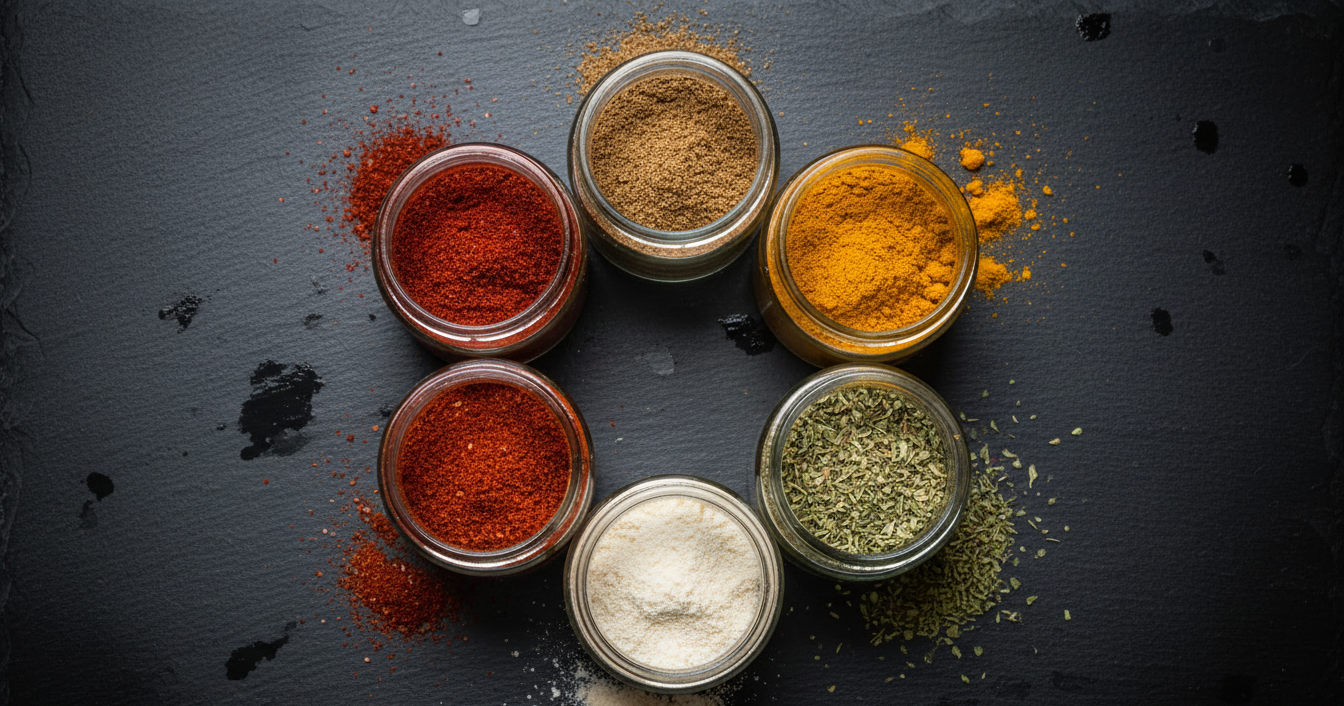
Cumin, paprika, smoked paprika, turmeric, coriander: Complex flavour profiles for 3–5 kcal per teaspoon at most. These are the backbone of most spice-based seasoning.
Dried herbs (oregano, thyme, rosemary, mixed herbs): Zero calories, long shelf-life, versatile.
Lemon and lime juice: Approximately 5–10 kcal per squeeze. Acid is a flavour amplifier — a squeeze of lemon on chicken, fish, or vegetables brightens everything.
Vinegars (balsamic, red wine, apple cider): 5–20 kcal per tablespoon. Balsamic adds sweetness and acidity simultaneously; red wine vinegar adds acidity and depth.
Soy sauce and tamari: 10–15 kcal per tablespoon. Adds umami and saltiness. Useful for Asian-style marinades and stir-fries.
Hot sauces (Sriracha, Frank's, Cholula): 5–10 kcal per teaspoon. Adds heat and complexity.
Pro Tip
Keep a "flavour shelf" of 8–10 spices and condiments you use regularly. You don't need 50 spices — you need versatile ones that appear in multiple cuisines. Smoked paprika, cumin, garlic powder, chilli flakes, mixed herbs, soy sauce, and a good hot sauce cover most of what you need.
Seasoning Profiles for Batch Cooking Variety
When batch cooking the same protein source, use different seasoning profiles to create variety:
Mediterranean: Garlic, lemon zest, oregano, smoked paprika, salt + squeeze of lemon post-cook
Cajun/Creole: Smoked paprika, cayenne, garlic powder, onion powder, thyme, salt, black pepper
Asian-style: Soy sauce, ginger, garlic, sesame oil (tiny amount), five spice
Simple herb: Garlic, rosemary, thyme, olive oil, salt + lemon juice at the end
Smoky: Smoked paprika, cumin, garlic, a drop of liquid smoke (very low calorie), salt
Indian-style: Cumin, coriander, turmeric, garam masala, garlic, ginger
Sauces and Dressings That Work on a Cut
Many bottled sauces are high-calorie. These are lower-calorie options worth knowing:
- Sriracha: ~5 kcal/tsp — excellent on eggs, chicken, rice bowls
- Chipotle hot sauce (e.g., Cholula): ~5 kcal/tsp
- Henderson's Relish (Sheffield staple): 4 kcal/tbsp — malty, slightly sweet, goes on almost anything
- Reduced-sodium soy sauce: ~8 kcal/tbsp
- Salsa: ~15 kcal/tbsp — good with mince dishes and as a salad dressing
- Mustard (English or Dijon): ~5 kcal/tsp — excellent protein-food companion
Warning
Bottled sauces marketed as "low-fat" often compensate with sugar. Hoisin sauce, sweet chilli sauce, and teriyaki sauce can contain 60–100 kcal per tablespoon — not terrible in small amounts, but easy to overdo. Check labels and use sparingly.
Glass Meal Prep Containers
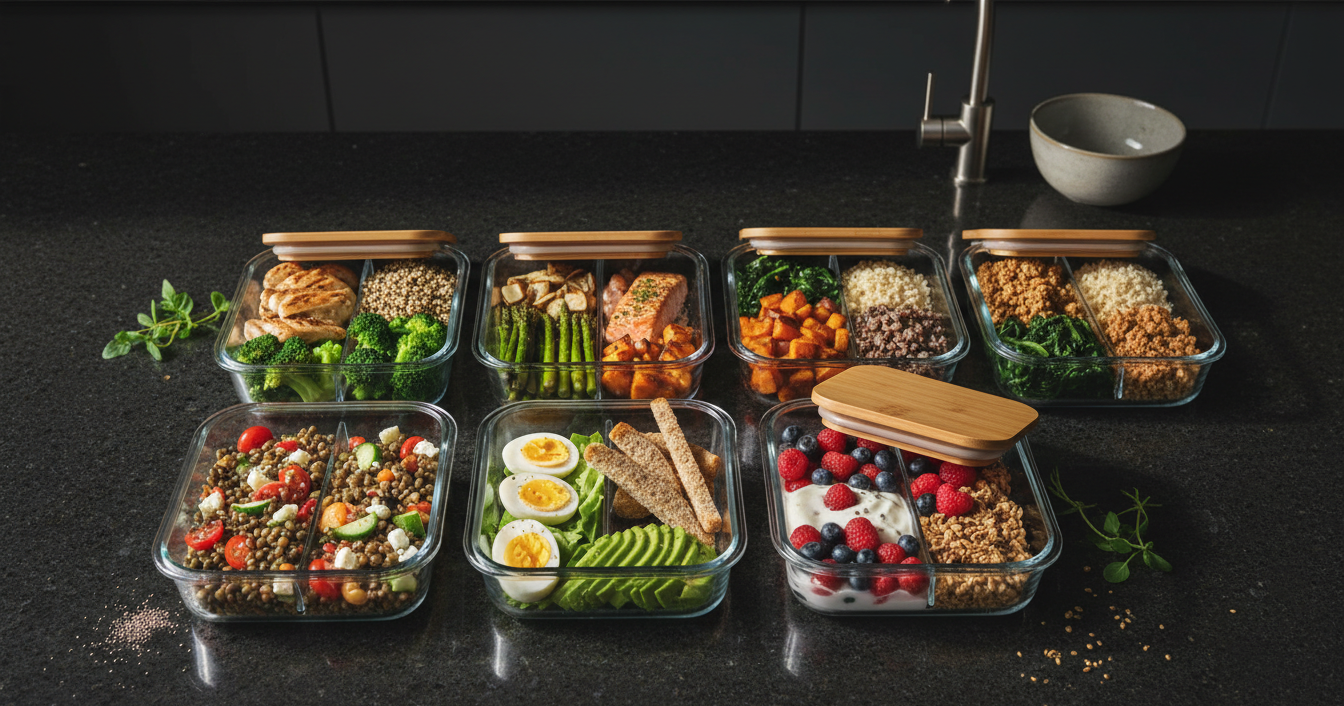
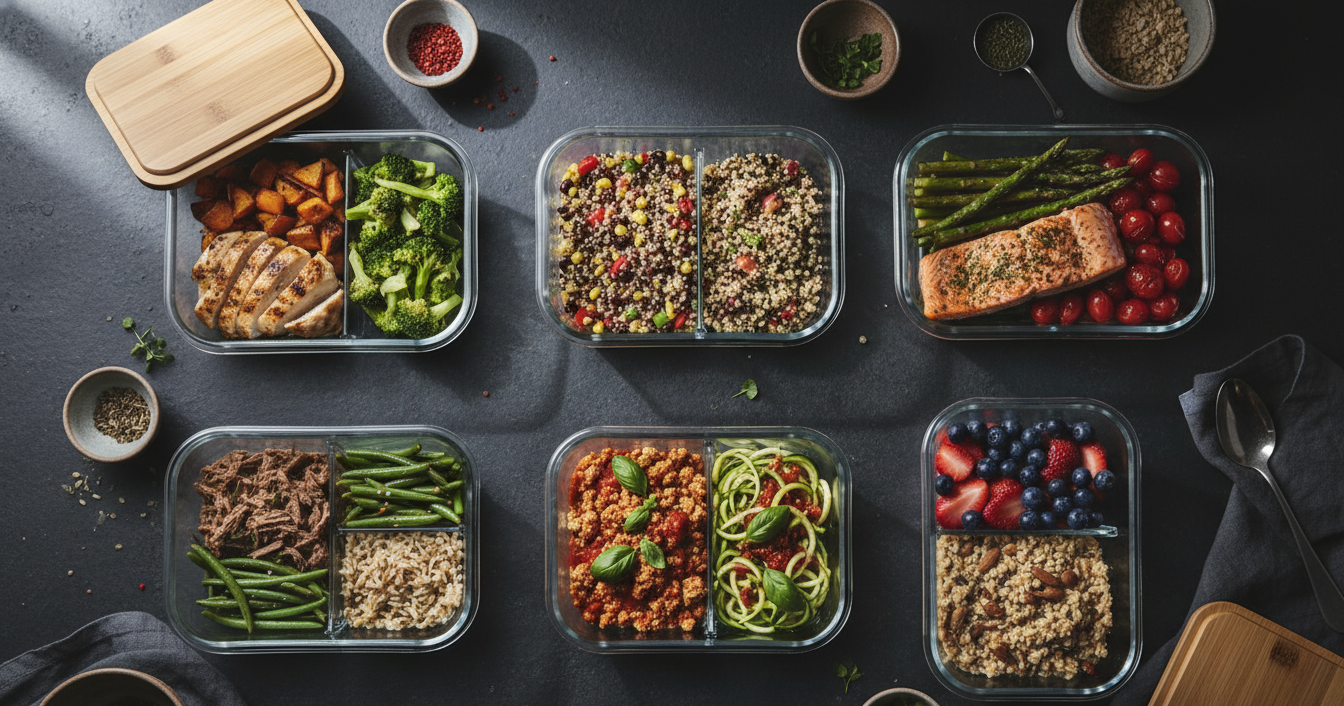
Microwave-safe glass with snap lids. Worth upgrading from plastic.
Affiliate link. See our disclosure.
Key Takeaways
- Seasoning solves the most common reason people quit cutting diets — monotony
- Salt is the most important flavour variable; most diet food is underseasoned
- Spices, dried herbs, and acid (lemon, vinegar) add complex flavour for negligible calories
- Rotate seasoning profiles (Mediterranean, Asian, Cajun, etc.) across the same protein base for variety
- A "flavour shelf" of 8–10 versatile spices replaces the need for dozens of specialist ingredients
- Low-calorie sauce options (sriracha, soy sauce, salsa, mustard) are practical everyday additions
More like this