Meal Prep
Grocery Shopping on a Cut (UK)
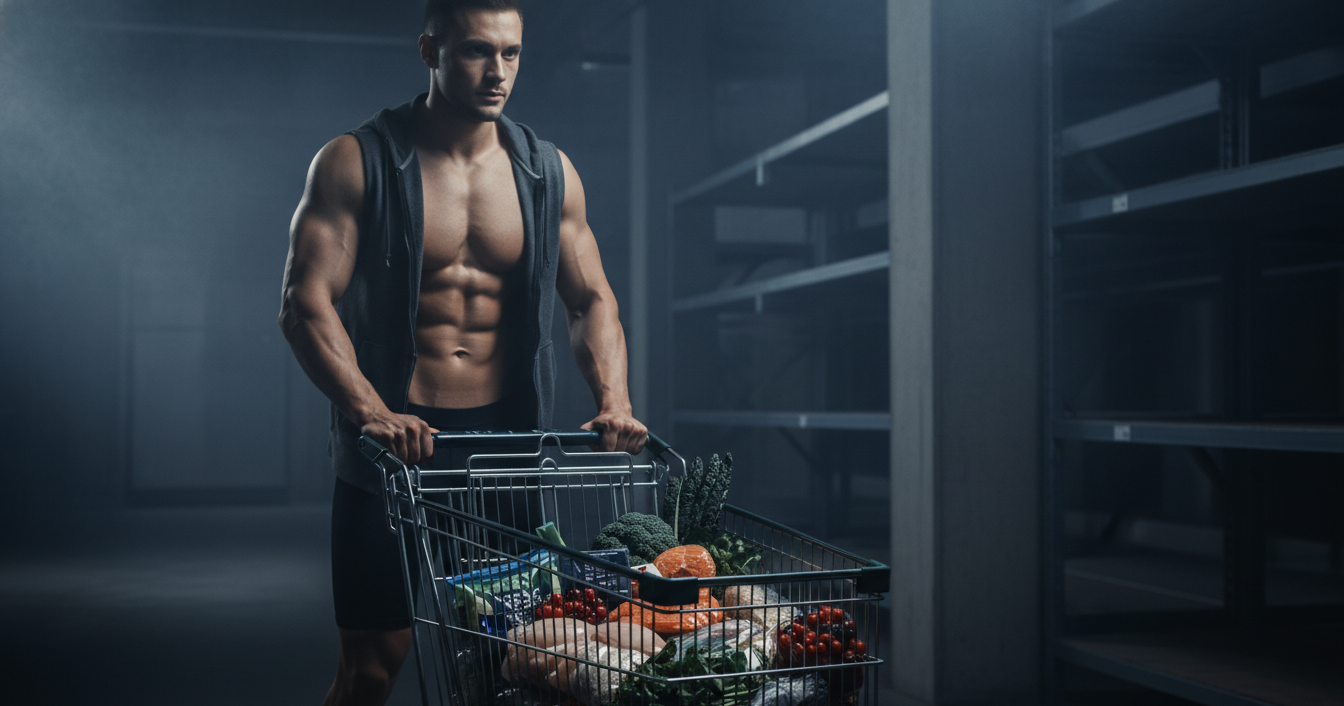
The shop you do determines the week you have. If your fridge and cupboards are stocked with the right food, eating on-target requires minimal willpower. If they're not, you'll be making decisions you'd rather not make at 7pm when you're tired and hungry.
The Principle: Buy Decisions, Not Food
When you're tired and hungry, your decision-making is compromised. The goal of a good shopping trip is to make the important decisions in advance — while you're in a neutral state, with a list, before hunger is a factor. Every item on your list is a decision made in advance. The shop itself should just be execution.
This means arriving with a complete, specific list, not a vague intention to "buy healthy stuff."
Building Your List
Base your list on your meal plan for the week. Work category by category:
Proteins (per week for 1 person on 160g protein/day):
- Chicken breast: 1–1.2kg (approximately £5–7 at UK supermarkets)
- Mince (beef/turkey): 500–600g
- Greek yogurt (0% fat): 2–3 large tubs (500g)
- Eggs: 12–18
- Tinned tuna or salmon: 3–4 tins
Carbohydrates:
- Basmati or long-grain rice: 1kg bag
- Oats (rolled): 1kg bag
- Sweet potatoes: 1–1.5kg
- Wholegrain bread: 1 loaf (if used)
- Frozen peas and sweetcorn
Vegetables:
- Fresh broccoli: 2–3 heads or 750g pre-cut bag
- Mixed salad leaves: 200g bag
- Cherry tomatoes: 400g
- Cucumbers and peppers
- Spinach: 200g bag (wilts significantly, so more is needed than expected)
- A mixed vegetable bag for variety
Fruit:
- Bananas (cheap, portable, good post-training)
- Berries (fresh or frozen — frozen is considerably cheaper)
- Apples or oranges for snacks
Pro Tip
UK supermarket own-brand versions of staples (oats, rice, tinned fish, frozen veg) are nutritionally identical to branded equivalents at 30–50% lower price. Aldi and Lidl are consistently the most cost-effective for high-protein staples across the UK.
UK Supermarket Strategy
Best for value: Aldi, Lidl, Asda, Morrisons
- Aldi and Lidl typically have the lowest prices on chicken, eggs, mince, and produce
- Own-brand protein staples (tinned fish, Greek yogurt) are excellent value
Best for variety: Tesco, Sainsbury's, Waitrose
- Larger range of specialist products, pre-marinated proteins, and higher welfare meats
- Tesco Clubcard deals can make branded protein (skyr, protein bars) competitive
Online shopping tip: Order online for staple delivery to avoid impulse buying. Use stores for fresh produce where you want to select items visually.
Avoiding Impulse Buys
The supermarket is designed to make you buy things you didn't plan to. Strategies that work:
- Never shop hungry. This is the most well-supported finding in consumer behaviour research. Eating a small, protein-rich snack before shopping measurably reduces impulse food purchases.
- Use a list and stick to it. Browse only your planned sections.
- Use click and collect or delivery for non-perishables. Removes browse temptation entirely.
- Go at low-traffic times. Busy shops increase decision fatigue.
Warning
Pre-packaged "healthy" products — protein bars, "light" ready meals, "high protein" snacks — are often expensive per gram of protein and contain significant added sugar or poor-quality ingredients. Check macros before assuming the "health" branding reflects the actual content.
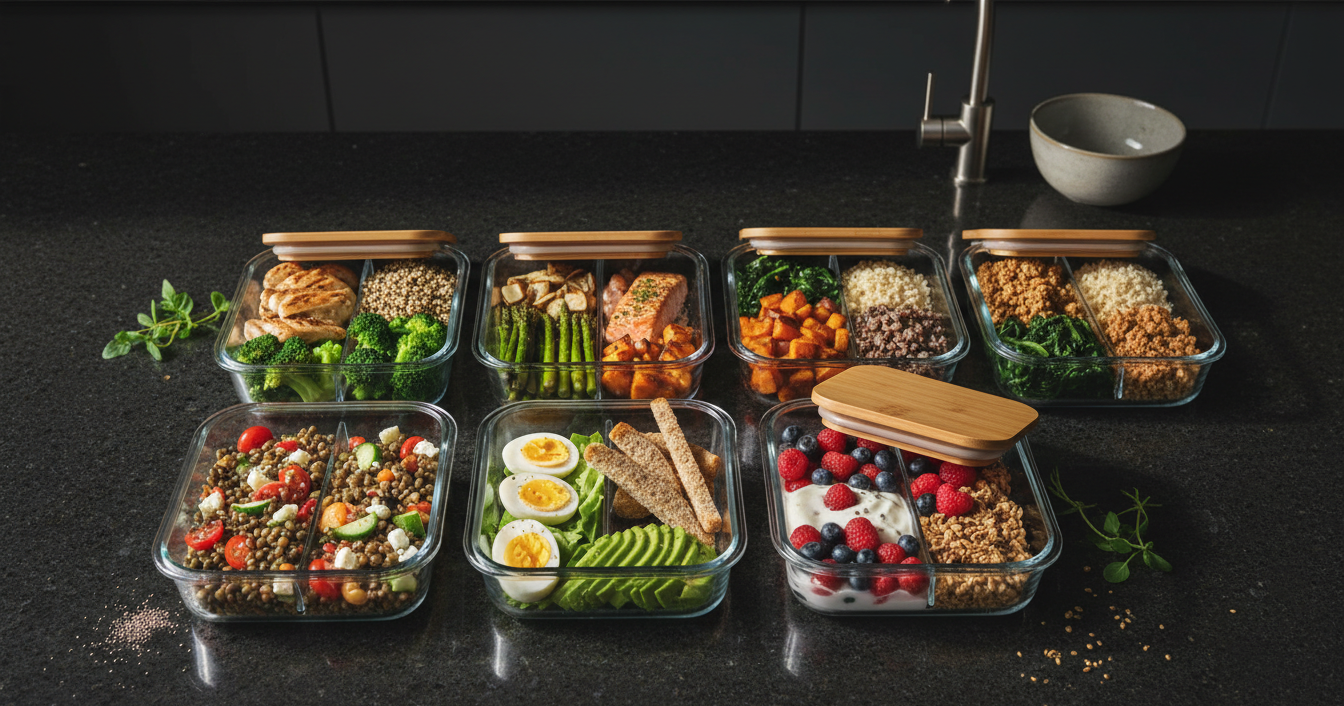
Glass Meal Prep Containers
Microwave-safe glass with snap lids. Worth upgrading from plastic.
Affiliate link. See our disclosure.
Key Takeaways
- Arrive with a complete list built from your meal plan — the shop should be execution, not decision-making
- Aldi, Lidl, and Asda offer the best value for high-protein staples in the UK
- Own-brand rice, oats, eggs, tinned fish, and frozen veg are nutritionally identical to branded versions at lower cost
- Never shop hungry — it measurably increases impulse buying
- Online delivery for staples eliminates browse temptation and saves time
- Check actual macros on "healthy" products — branding doesn't equal nutrition quality
More like this