Meal Prep
Weekly Meal Prep Guide
Meal prep is one of the highest-leverage habits you can build during a cut. When healthy, on-target food is ready to eat, you make better decisions. When you're tired, hungry, and there's nothing prepared, you make whatever decision is fastest — and that's rarely the one that serves your goals.
The Case for Meal Prep
The evidence is clear: preparation predicts dietary adherence. A 2017 study in the International Journal of Behavioral Nutrition and Physical Activity found that meal planning was associated with better diet quality, lower obesity rates, and greater dietary variety. The mechanism is simple — decision-making under hunger and fatigue is poor. Removing the decision by preparing food in advance eliminates that failure point.
The Sunday Prep System
Most people find a single weekly prep session works well. Two to three hours on Sunday sets you up for 5–6 days. Here's a repeatable framework:
1. Plan your week first (15–20 minutes) Before shopping or cooking, decide what you're eating. Map out lunches and dinners for the week. Breakfasts are usually simpler and need less prep. Keep it realistic — if you always end up eating out on Thursdays, don't prep Thursday's dinner.
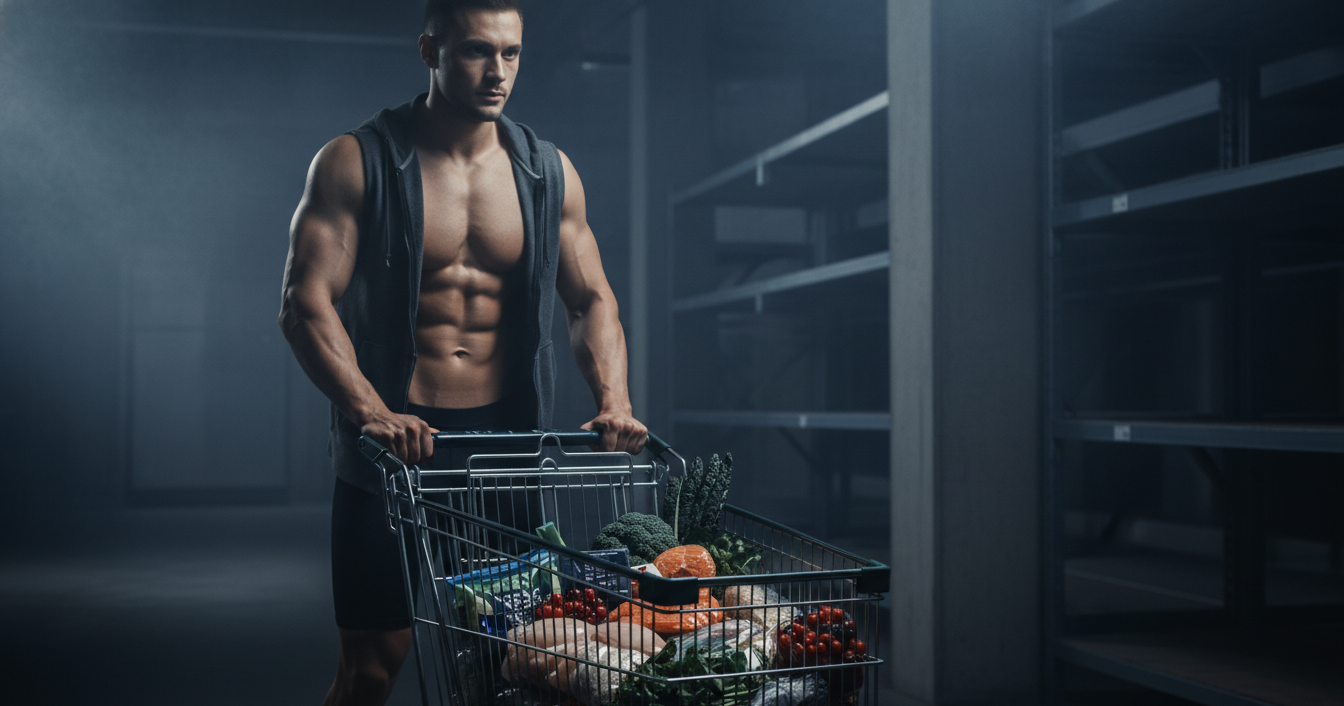
2. Shop based on your plan (not the other way around) Write a specific list from your meal plan. Shopping without a list leads to impulse buys and missing items, both of which derail prep.
3. Batch cook your proteins This is the highest-value prep task. Cook a large batch of your main protein source — chicken breasts, mince, salmon, eggs, lentils. These take 20–40 minutes and produce 4–6 portions. See the individual guides for specific cooking methods.
4. Cook carb bases in bulk A large pot of rice, a tray of roasted sweet potatoes, or a batch of cooked pasta provides the carbohydrate base for multiple meals. These keep well for 4–5 days in the fridge.
5. Prepare vegetables Wash, chop, and store raw vegetables ready for cooking or eating. Greens like broccoli and courgette can be blanched and stored. Leafy greens can be pre-washed and spun dry.
Pro Tip
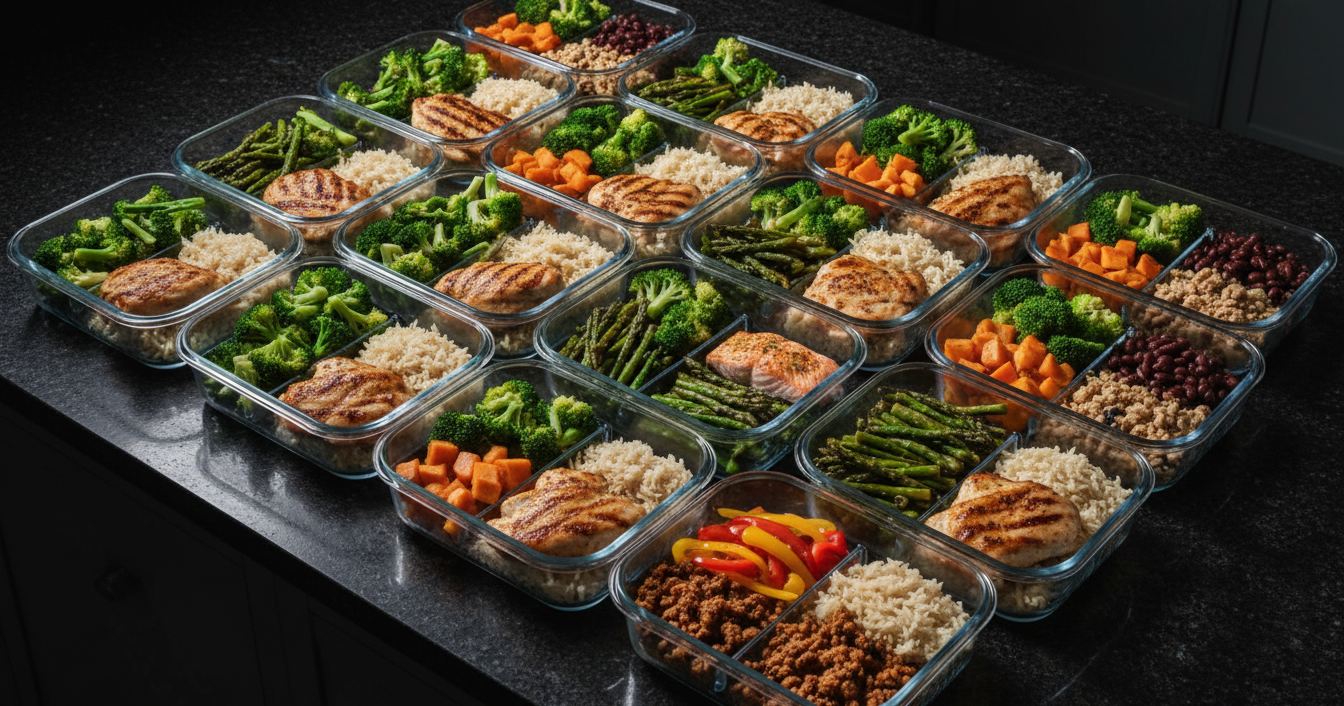
Cook grains and proteins separately and combine at meal times. Pre-combined meals (chicken and rice mixed together) get soggy faster and reduce versatility. Keeping components separate means you can mix and match across the week and vary your meals.
What to Prep and What Not to
Good to prep:
- Cooked proteins (chicken, mince, salmon, boiled eggs, lentils)
- Cooked grains (rice, quinoa, pasta)
- Roasted vegetables
- Overnight oats and yogurt parfaits
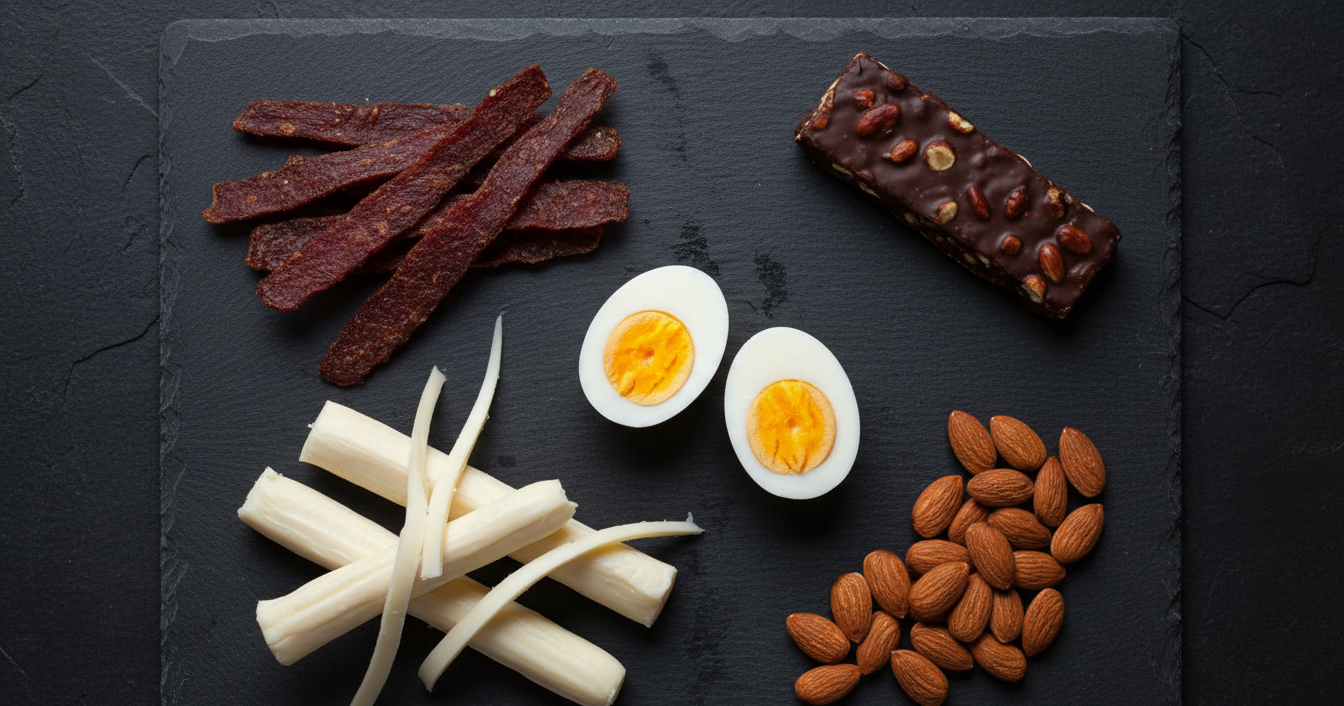
- Protein snack packs (portioned nuts, cheese, chopped veg)
Best made fresh:
- Salads with leafy greens (go limp quickly)
- Eggs cooked to order (scrambled/fried degrade in texture)
- Anything with fresh herbs added
- Avocado-based preparations
Storage and Shelf Life
Standard safe storage in the fridge (below 5°C):
- Cooked chicken/meat: 3–4 days
- Cooked grains: 4–5 days
- Cooked vegetables: 3–4 days
- Cooked fish: 2–3 days (shorter — prep less or freeze extras)
- Hard-boiled eggs: up to 7 days (in shell)
For anything you won't eat within the safe window, freeze immediately after cooling — don't leave it "to see how long it lasts."
Warning
Cool cooked food quickly — ideally within 2 hours — before refrigerating. A large pot of rice left at room temperature for several hours is a food safety risk. Spread it across a wide tray to cool faster, or use cold water cooling if needed.
A Realistic Prep Timeline
- 15 min: Planning and recipe review
- 20 min: Cooking proteins (hands-off oven time)
- 20 min: Cooking grains
- 20 min: Chopping and roasting vegetables
- 10 min: Portioning snacks, making overnight oats
- 10 min: Cleaning up
Total: approximately 90 minutes hands-on, 2–2.5 hours start to finish
Glass Meal Prep Containers
Microwave-safe glass with snap lids. Worth upgrading from plastic.
Affiliate link. See our disclosure.
Key Takeaways
- Meal prep removes decision-making at points of hunger and fatigue — the primary reason it works
- A single Sunday prep session (2–3 hours) can set you up for most of the working week
- Cook proteins, grains, and vegetables separately and combine at meal times for flexibility
- Standard cooked proteins keep 3–4 days in the fridge; freeze anything beyond that window
- Cool food quickly before refrigerating — food safety matters
- Plan meals before you shop; shopping without a list leads to gaps and impulse buys
More like this