Beginner
Cheap High-Protein Foods UK: Eat Well on a Budget
Eating high protein during a cut doesn't have to be expensive. With the right choices at the right supermarkets, you can hit 160–180g of protein per day for under £30–35 per week on food costs. Here's exactly what to buy and how to use it.
The Shopping List
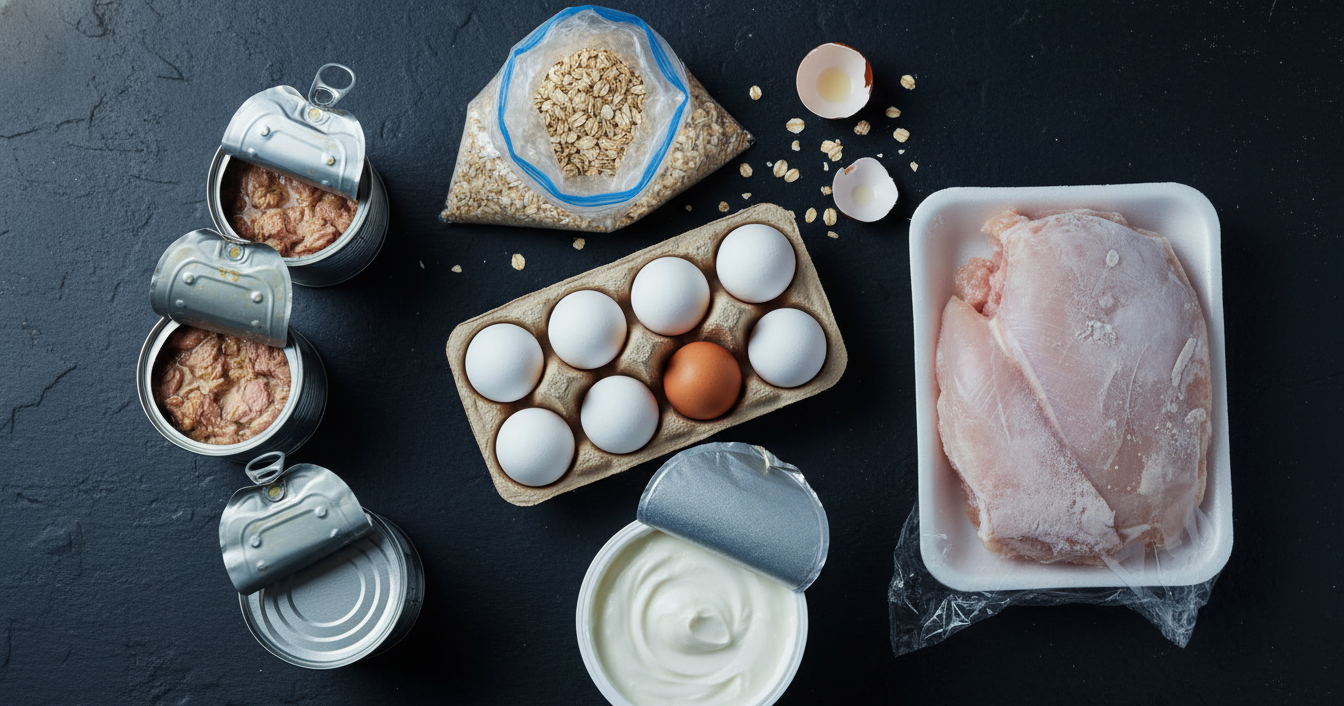
Canned Tuna (in brine) — ~£0.55 per tin (own brand, Aldi/Lidl)
Each 145g tin provides approximately 22–25g of protein for around 55 pence. This is among the cheapest protein per calorie you'll find anywhere.
Uses: Mix with fat-free Greek yogurt + seasoning as a tuna mayo substitute. Add to pasta, rice dishes, wraps. Eat cold as a quick meal.
Eggs — ~£1.75 for 10 large eggs (Aldi)
Each egg provides ~6g protein. A 3-egg omelette = 18g protein for under 30p. Eggs are also rich in choline and fat-soluble vitamins.
Uses: Scrambled, poached, omelettes, frittatas, hard-boiled for snacks.
Chicken Breast (frozen) — ~£4–5/kg (Aldi/Lidl/Iceland)
Frozen chicken breast has identical nutritional value to fresh and often significantly cheaper. Look for IQF (individually quick-frozen) — individual pieces you can defrost as needed.
Uses: Bake from frozen (200°C for 25–30 minutes), stir fry, slow cook, meal prep in bulk.
Own-Brand 0% Fat Greek Yogurt — ~£1.00/kg (Aldi/Lidl)
Around 10g protein per 100g. Creamy, filling, versatile. The Aldi and Lidl own-brand versions are excellent value.
Uses: Breakfast with berries, protein shake thickener, substitute for mayonnaise or sour cream in sauces, high-protein dessert base.
Cottage Cheese (0% fat) — ~£1.20 per 500g (Tesco own brand)
Approximately 11–12g protein per 100g. A largely underrated food — in the US and Eastern Europe it's a bodybuilding staple; UK uptake is lower but it's increasingly available.
Uses: Mix with tuna and seasoning for a high-protein spread, eat with fruit for a dessert-like meal, blend smooth for a creamy high-protein sauce base.
Turkey Mince (5% fat) — ~£2.50–3.00/500g
Versatile, lean, and cheaper than beef. Contains around 20g protein per 100g cooked.
Uses: Bolognese, burgers, meatballs, cottage pie topping, stuffed peppers.
Canned Mackerel/Sardines in brine — ~£0.60–0.80 per tin
Oily fish packed with protein and omega-3. Mackerel is particularly good value. Two tins provide 30–40g protein.
Uses: On rye bread/crackers, mixed with vegetables for a quick salad, pasta with tomato sauce.
Red Lentils — ~£0.90 per 500g
Not a complete protein, but very high in protein per penny (approximately 9g per 100g cooked) and extremely filling due to fibre content. Pair with eggs, Greek yogurt, or meat to complete the amino acid profile.
Uses: Lentil soup, dhal, mixed into mince dishes to bulk them out.
Pro Tip
A simple, cheap, high-protein day could be: eggs at breakfast (18g), tuna and crackers at lunch (25g), Greek yogurt snack (15g), chicken and lentils at dinner (40g), cottage cheese dessert (15g). Total: ~113g protein from cheap foods for well under £5 in ingredients. Top up with a protein shake to hit 160g.
Budget-Friendly Meal Combinations
High-protein meal under £1.00:
- Scrambled eggs (3 eggs) on 2 slices of Lidl own-brand protein bread: ~25g protein, ~£0.60
High-protein meal under £1.50:
- 150g cooked chicken breast + 200g frozen veg + seasoning: ~35g protein, ~£1.20
High-protein snack under £0.50:
- 200g 0% Greek yogurt + cinnamon: ~20g protein, ~£0.20
High-protein dinner under £2.00:
- Turkey mince bolognese (100g turkey, 200g own-brand pasta, tomato passata): ~35g protein, ~£1.80
Where to Shop
Aldi and Lidl: Consistently the cheapest for own-brand protein staples (yogurt, eggs, chicken, tuna). Quality is comparable to mid-range supermarket brands.
Tesco and Sainsbury's own-brand: Usually 20–40% cheaper than branded equivalents with identical specs.
Iceland: Good for frozen chicken breast and fish in bulk. Often has good value multibuys.
Warning
"High protein" labelling on foods can be misleading. Check the per-100g nutrition label. Under UK law, a food can be labelled "high protein" if protein provides 20%+ of total calories — but this can still mean a low absolute amount per serving.
Myprotein Impact Whey
The UK's best-selling protein powder. 21g protein per scoop, under 50p per serving on sale.
Affiliate link. See our disclosure.
Key Takeaways
- Canned tuna, eggs, frozen chicken, and 0% Greek yogurt are the foundations of a budget high-protein diet
- Shop at Aldi, Lidl, and Tesco/Sainsbury's own-brand for the best value
- You can hit 160g of protein daily for £5–6 in food costs
- Cottage cheese, turkey mince, and canned oily fish are underrated high-value options
- Check nutrition labels rather than relying on "high protein" marketing claims
More like this