Fat Loss Strategies
Body Composition vs Scale Weight: Why the Number on the Scales Lies
The scale is the default progress metric for almost everyone who starts a cut. It's immediate, quantifiable, and produces a number you can track over time. The problem is that scale weight measures total body mass — not fat — and total body mass fluctuates significantly for reasons entirely unrelated to fat loss.
What Scale Weight Actually Measures
Your scale weight includes:
- Fat mass (what you're trying to lose)
- Muscle mass (what you're trying to keep)
- Water (can fluctuate by 2–4kg daily)
- Glycogen (stored carbohydrate in muscles and liver — 1g glycogen holds ~3g water)
- Gut content (food and waste in transit — 0.5–2kg depending on meal timing)
- Bone density
On any given morning, you could weigh 2–3kg more than you did yesterday simply because you ate a high-sodium meal, didn't fully empty your bowels, or ate more carbohydrates. None of this reflects fat gain.
Body Composition: The More Useful Measure
Body composition refers to the ratio of fat mass to lean mass. Two people weighing 80kg could look completely different if one has 15% body fat and the other has 30%.
What you actually want: to reduce the fat mass component while preserving lean mass. This can happen even when scale weight stays flat — a situation called body recomposition, which is particularly common in beginners and those returning after a break.
How to Track Body Composition
Progress Photos
The most information-rich tool available at home. Take consistent photos (same lighting, same time of day, same poses) weekly or fortnightly. You can see changes in shape, muscle definition, and fat distribution that the scale doesn't capture.
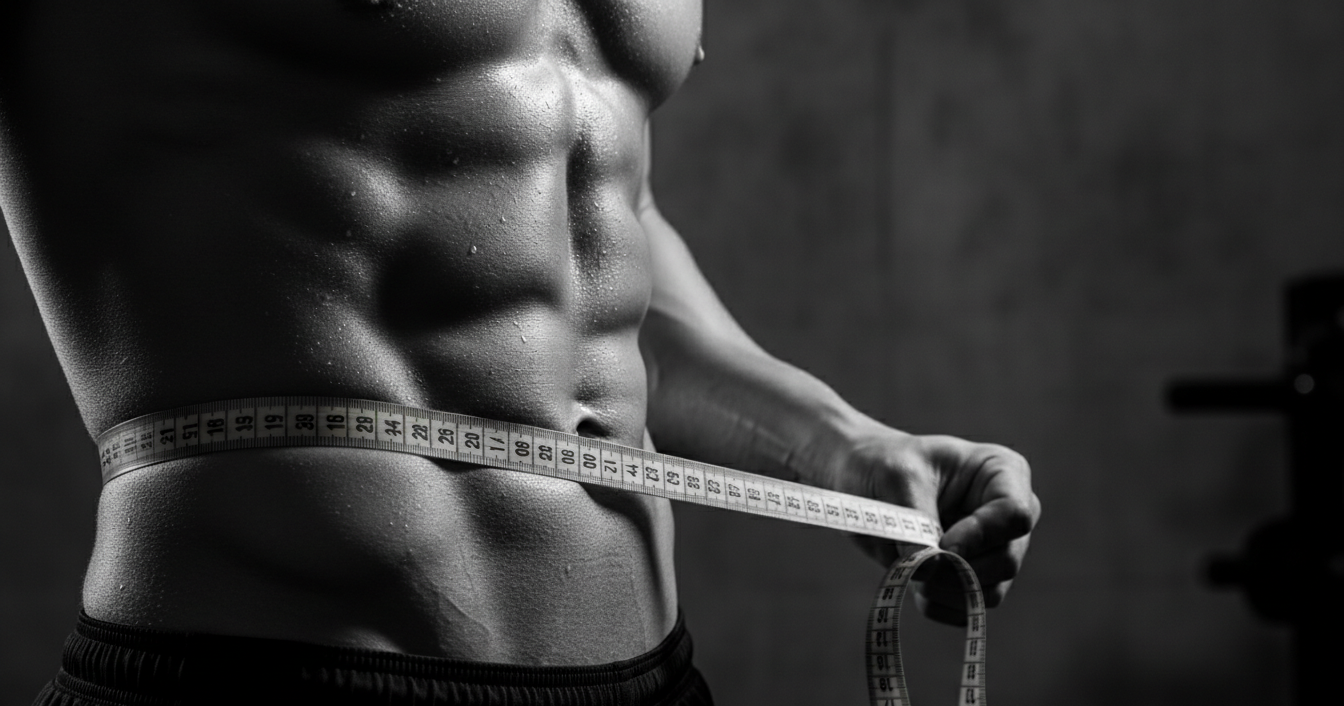
Tape Measurements
Measuring waist, hips, chest, and limbs provides objective data that reflects fat loss independently of water fluctuations. Waist circumference in particular is a reliable indicator of visceral fat reduction.
How to take it accurately: measure first thing in the morning, before food, at the same points each time. Use a flexible tape measure held snugly but not compressed.
DEXA Scan
The gold standard for body composition measurement. A DEXA (dual-energy X-ray absorptiometry) scan gives precise measurements of fat mass, lean mass, and bone density throughout the body. In the UK, these are available privately for £50–100 at specialist clinics. Worth doing at the start and end of a significant cut.
Bioelectrical Impedance
Built into many home scales (and gym analysers). Passes a small electrical current through the body and estimates body fat percentage based on resistance. Convenient but highly inconsistent — readings vary significantly based on hydration, time of day, and food intake. Use it for rough trends only, not absolute numbers.
Pro Tip
The most useful home protocol: weigh daily, track a 7-day rolling average, take monthly photos and tape measurements. Use all three together. If the average is trending down and photos are improving, your cut is working — even if individual daily weights are volatile.
The Recomposition Scenario
It's possible to simultaneously lose fat and gain muscle — particularly for beginners, people returning after a break, or those with significant fat to lose. In this scenario, the scale may barely move for weeks while your body is genuinely changing.
Someone who loses 2kg of fat and gains 1kg of muscle is down 1kg on the scale but significantly changed in appearance. If they judge progress only by the scale, they'll underestimate what's happening.
This is why progress photos and measurements are essential companions to scale weight.
When to Worry About Scale Weight
Scale weight becomes relevant when:
- The 4-week rolling average is not trending in the right direction
- Measurements are not reducing despite an apparent calorie deficit
- Training performance is dropping significantly (suggesting muscle loss)
A single week of flat or rising scale weight is not cause for concern. Four weeks of consistent flatness, despite verified calorie tracking, is worth addressing.
Warning
Daily weigh-ins can be psychologically harmful if you treat each reading as a referendum on your effort. If you find yourself anxious or distressed by the number, switch to weekly weigh-ins and focus more on photos and measurements.
Myprotein Impact Whey
The UK's best-selling protein powder. 21g protein per scoop, under 50p per serving on sale.
Affiliate link. See our disclosure.
Key Takeaways
- Scale weight includes fat, muscle, water, glycogen, and gut content — only fat reflects your goal
- Body composition (fat vs. lean mass ratio) is the more useful measure than total weight
- Progress photos and tape measurements capture what scale weight misses
- DEXA scans are the gold standard for accurate body composition data
- Use a 7-day rolling average for scale weight to reduce day-to-day noise
More like this
Related guides

Fat Loss Strategies
Setting Realistic Fat Loss Goals: What's Actually Achievable
6 min read

Fat Loss Strategies
Common Cutting Mistakes (And How to Avoid Them)
7 min read
Fat Loss Strategies
The 10,000 Steps Myth: Where Did It Come From?
5 min read

Fat Loss Strategies
NEAT and Daily Activity: The Fat Loss Variable Nobody Talks About
6 min read