Cutting Fundamentals
Water Weight During a Cut
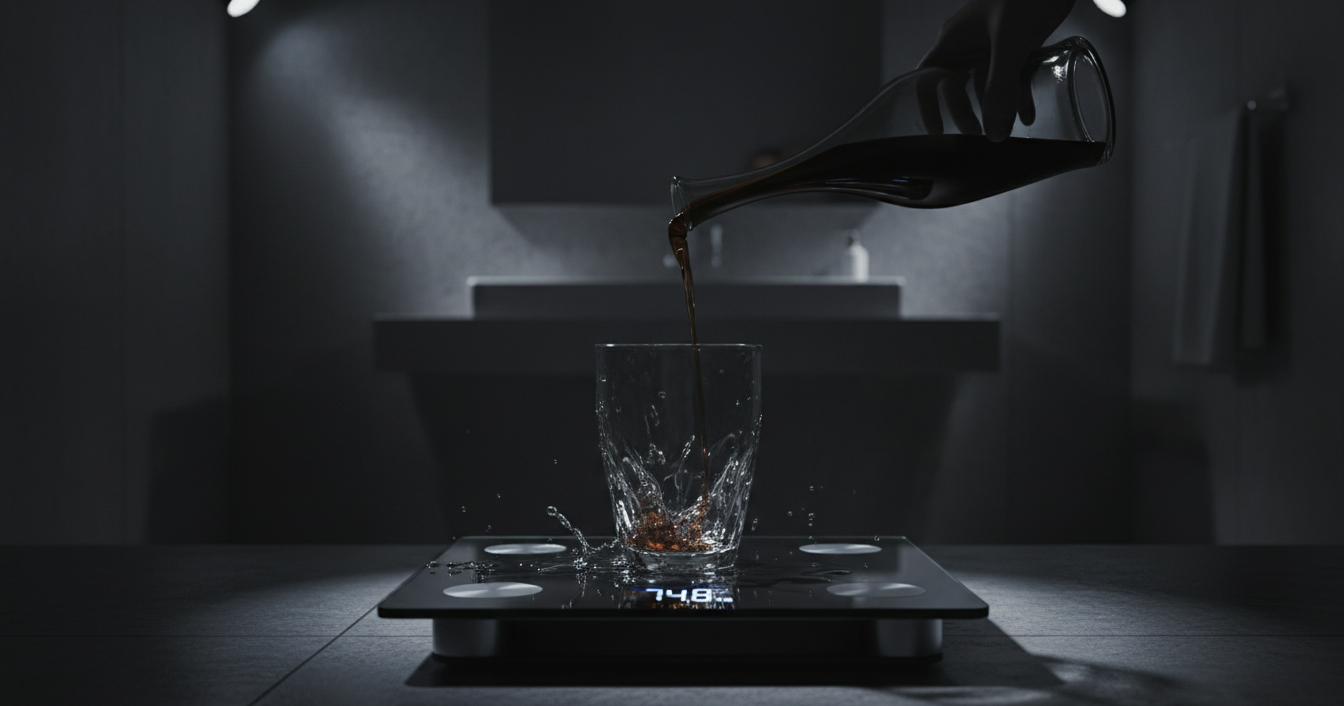
One of the most confusing aspects of cutting is that your weight can swing by 2–3kg over a few days without any change in body fat. Understanding water weight — what causes it, how it behaves, and why it's not fat — will save you from making unnecessary adjustments to a plan that's already working.
What Is Water Weight?
Your body stores water throughout its tissues — in muscle, under the skin, in your digestive tract, and in various other compartments. This stored water fluctuates constantly in response to dietary sodium, carbohydrate intake, hydration levels, exercise, stress hormones, and hormonal cycles.
The key point: water weight is not fat. You cannot gain 1.5kg of fat overnight from a meal, no matter what the scale says the next morning.
Why the Scale Jumps After a Big Meal
Eating a high-sodium or high-carbohydrate meal causes temporary water retention:
- Sodium binds water and causes short-term retention. A salty restaurant meal can add 1–2kg of water weight that clears within 24–48 hours.
- Carbohydrates are stored as glycogen in the liver and muscles. Each gram of glycogen binds approximately 3g of water. A high-carb day can add 0.5–1.5kg of water-bound glycogen weight.
This is also why the scale drops quickly in the first 1–2 weeks of a cut: reduced carbohydrate and sodium intake depletes glycogen stores, releasing the water that was bound to it. Some of that initial rapid weight loss is real fat, but much of it is water.
Pro Tip
The initial 1–3kg that drops in the first 1–2 weeks of a cut is mostly water and glycogen. Don't be disappointed when the rate of loss slows after this — that's when you're burning genuine fat.
Hormonal Water Retention
For women, hormonal cycles cause significant water weight fluctuation across the month. Progesterone and oestrogen both affect fluid balance, and water retention in the luteal phase (the 2 weeks before menstruation) can easily add 1–3kg. This means the scale can look significantly worse in the second half of the cycle compared to the first, even on an identical diet.
For both men and women, elevated cortisol (from stress, poor sleep, or overtraining) causes water retention. A bad week at work can add 1–1.5kg to the scale that has nothing to do with food intake.
Exercise and Water Retention
Starting a new exercise programme, or significantly increasing training volume, causes muscles to retain more water as part of the repair and adaptation process. This is temporary, but it can completely mask fat loss on the scale for 2–4 weeks when people start lifting.
Similarly, a particularly hard session can cause delayed onset muscle soreness (DOMS) that comes with temporary localised water retention. The scale may go up after an intense leg session — this is not fat gain.
Warning
If you start a cut and a new training programme simultaneously, expect the scale to be especially misleading for the first 3–4 weeks. Use tape measurements and progress photos as your primary progress indicators during this period.
How to Read Through Water Weight Noise
Use weekly averages. Average your daily weigh-ins over 7 days and compare weekly averages. This smooths out daily fluctuations and shows the actual trend.
Weigh consistently. Same time, same conditions — morning after toilet, before eating or drinking. Consistency in measurement conditions reduces variability.
Ignore single data points. A one-day spike on the scale after a social event is meaningless. A sustained upward trend in weekly averages over 3+ weeks is worth investigating.
Track multiple metrics. Tape measurements, progress photos, and how your clothes fit are all better indicators of genuine fat loss than a volatile daily scale number.
Myprotein Impact Whey
The UK's best-selling protein powder. 21g protein per scoop, under 50p per serving on sale.
Affiliate link. See our disclosure.
Key Takeaways
- Water weight fluctuates by 1–3kg day-to-day based on sodium, carbs, stress, and hormones — this is not fat
- Initial rapid weight loss in the first 1–2 weeks of a cut is largely water and glycogen
- Women experience natural cycle-driven water retention that can mask fat loss
- Elevated cortisol from stress or overtraining causes water retention
- New exercise programmes trigger temporary water retention in muscles
- Always use weekly averages and multiple tracking methods to assess real progress
More like this