Training
Mind-Muscle Connection: Does It Actually Matter?
You've probably heard experienced gym-goers talk about "feeling the muscle work." Some people dismiss this as gym-bro mysticism. Others swear it's the difference between a mediocre physique and a great one. The truth, as usual, sits somewhere in the middle — and there's actual research behind it.
What Is the Mind-Muscle Connection?
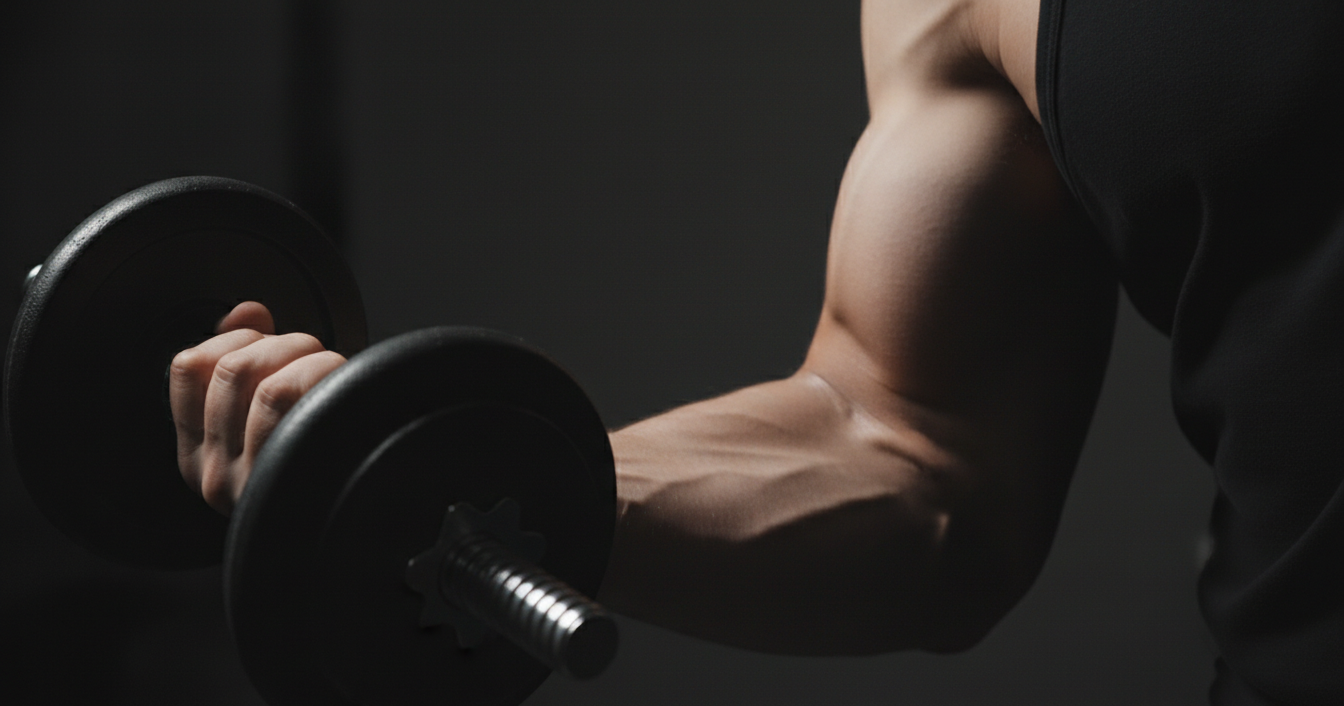
The mind-muscle connection (MMC) refers to consciously directing your attention to the specific muscle you're trying to train during an exercise. Rather than just moving weight from A to B, you're actively thinking about contracting, squeezing, and feeling the target muscle through the full range of motion.
This isn't woo. It's neuromuscular. When you consciously focus on a muscle, you increase motor unit recruitment in that muscle — essentially getting more fibres firing at once. A 2018 study published in the European Journal of Sport Science found that internal focus (thinking about the muscle) produced significantly greater bicep and tricep activation compared to external focus (thinking about the movement).
When It Matters Most
MMC is most relevant for isolation exercises — curls, lateral raises, cable flyes, leg extensions. These movements already isolate a muscle, so getting the most out of them depends on quality contraction rather than load.
For compound lifts — squats, deadlifts, bench press, rows — external focus (think about the bar path or pushing through the floor) tends to produce better performance outcomes. The muscle activation takes care of itself when mechanics are good.
Pro Tip
On isolation exercises, try reducing the weight by 10–15% and genuinely focusing on the contraction. If you feel more in the muscle, you're doing it right. That's a more productive set than grinding heavier weight with poor feel.
How to Develop It
Start with the warm-up. Use your first one or two lighter sets to actively practise feeling the muscle. Don't rush to your working weight.
Slow the eccentric. Lowering weight slowly (3–4 seconds) forces you to control the muscle, which improves awareness. This is especially useful for lagging body parts.
Try isometric holds. Pausing at the peak contraction for 1–2 seconds is one of the best ways to build awareness. The pause eliminates momentum and forces genuine muscular control.
Use your hands. Placing a free hand on the muscle you're training (e.g. hand on chest during cable flyes) can sharpen awareness through tactile feedback.
Does It Matter on a Cut?
Yes, arguably more so. During a cut, you're doing fewer total sets and using slightly less load. Every set has to count. Getting strong neural drive to the target muscle means you're getting more stimulus per set, which helps maintain muscle mass with less overall volume.
It also helps when fatigue is higher. When you're tired and under-fuelled, technique drifts. Having strong MMC helps you stay connected to what the muscle is doing, even when the session feels harder than usual.
Warning
Don't confuse soreness with good MMC. A deep burn or soreness the next day can come from poor mechanics or overextension, not necessarily effective muscle training. Focus on a controlled, full contraction — not just chasing the burn.
Myprotein Impact Whey
The UK's best-selling protein powder. 21g protein per scoop, under 50p per serving on sale.
Affiliate link. See our disclosure.
Key Takeaways
- Mind-muscle connection is a real neuromuscular phenomenon backed by research
- It's most valuable for isolation exercises; compound lifts benefit more from external focus
- Slow eccentrics, isometric holds, and lighter warm-up sets help develop MMC
- On a cut, strong MMC helps you get more stimulus per set with less volume
- It's not about chasing the burn — it's about intentional, controlled muscle contraction
More like this