Nutrition Science
Fibre and Satiety
One of the most effective and underused tools for managing hunger during a cut is dietary fibre. It's not a supplement, it's not expensive, and it's freely available in food — but most people eating a standard Western diet consume only half the recommended amount. During a cut, fibre can be the difference between a sustainable deficit and a miserable one.
How Fibre Reduces Hunger
Fibre works through several complementary mechanisms:
Physical volume. High-fibre foods typically have significant volume relative to their caloric content. A large bowl of leafy vegetables might contribute only 50–80 kcal but takes up substantial stomach space, triggering stretch receptors that signal fullness to the brain.
Slowed gastric emptying. Soluble fibre (found in oats, legumes, apples, and psyllium husk) forms a gel in the stomach that slows digestion, extending the period of satiety after a meal. A high-fibre meal keeps you fuller for longer compared to the same calories without fibre.
Gut hormone response. Fermentable fibres in the colon produce short-chain fatty acids (SCFAs) that stimulate the release of GLP-1 and PYY — both appetite-suppressing hormones that reduce food intake at subsequent meals.
Blood sugar stabilisation. Fibre blunts the glycaemic response to meals, reducing blood sugar spikes and subsequent drops that drive hunger. More stable blood glucose throughout the day correlates with more stable hunger levels.
Pro Tip
Adding a serving of leafy greens, legumes, or oats to every meal is one of the easiest ways to increase satiety without meaningfully increasing calorie intake. A 200g serving of broccoli contains roughly 70 kcal but significant bulk, fibre, and water — three hunger-fighting properties in one.
Daily Fibre Targets
The NHS recommends 30g of dietary fibre per day for adults. During a cut, this should be treated as a minimum — aiming for 35–45g per day is reasonable and beneficial for hunger management.
For context, the average UK adult consumes approximately 18–20g/day. Doubling this is achievable without eating "health food" exclusively:
- Replace white bread/rice/pasta with wholegrain versions (+6–10g/day)
- Add a daily serve of legumes (chickpeas, lentils, beans): +7–10g
- Eat at least 3–4 portions of vegetables per day: +8–12g
- Snack on fruit rather than processed options: +3–5g
Types of Fibre and Their Functions
Soluble fibre: Dissolves in water, forms a gel, slows digestion. Found in oats, legumes, berries, apples, and linseeds. Best for blood sugar stabilisation and extended satiety.
Insoluble fibre: Doesn't dissolve, adds bulk to stool, promotes gut motility. Found in wholegrains, nuts, vegetables, and wheat bran. Best for digestive health and physical satiety from volume.
Both types are beneficial and most whole foods contain a mixture.
Fibre and Gut Microbiome During a Cut
A 2021 study in Cell Host & Microbe found that a diet high in diverse plant fibres increased gut microbiome diversity and reduced markers of inflammation, compared to a high-protein/low-fibre diet. A healthier gut microbiome has downstream effects on appetite regulation, mood, and immune function — all of which matter during the physiological stress of a cut.
Warning
If you dramatically increase fibre intake too quickly, digestive discomfort (bloating, gas, loose stools) is common. Increase fibre intake gradually over 1–2 weeks, and ensure adequate hydration — fibre requires water to function properly.
High-Fibre, Low-Calorie Foods for Cutting
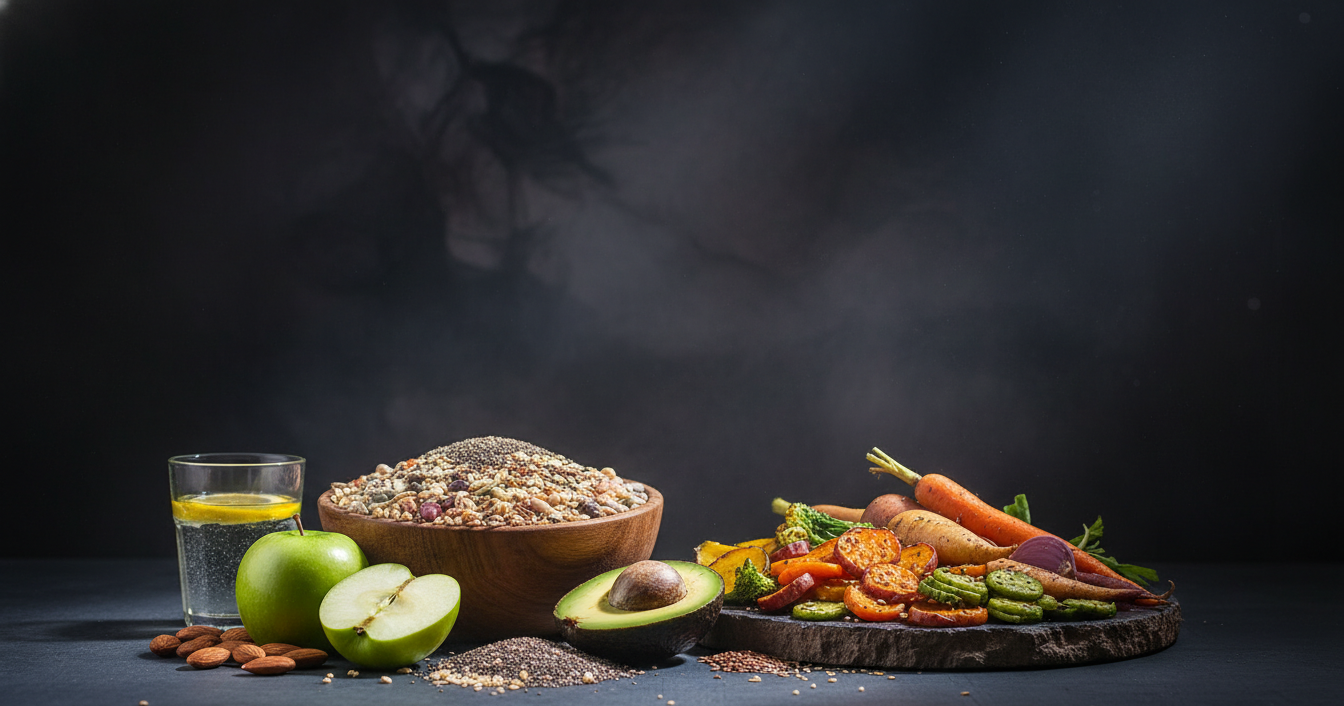
- Leafy greens (spinach, kale, rocket): ~3–5g per 100g, ~25–35 kcal
- Broccoli: ~3g per 100g, ~34 kcal
- Lentils (cooked): ~8g per 100g, ~115 kcal
- Black beans (cooked): ~9g per 100g, ~130 kcal
- Oats (dry): ~10g per 100g, ~375 kcal
- Berries: ~2–5g per 100g, ~40–55 kcal
- Psyllium husk: ~70g per 100g (often added to shakes or yogurt)
Greens Powder
Quick micronutrient insurance for days when vegetable intake is low.
Affiliate link. See our disclosure.
Key Takeaways
- Fibre reduces hunger through physical volume, slowed digestion, gut hormone stimulation, and blood sugar stabilisation
- Aim for 35–45g of fibre daily during a cut, against a UK average intake of only 18–20g
- Prioritise wholegrain staples, legumes, vegetables, and fruit over processed foods
- Soluble fibre (oats, legumes) is especially effective for extended post-meal satiety
- Increase fibre intake gradually to avoid digestive discomfort
- Adequate hydration is required for fibre to function optimally
More like this