Beginner
Body Measurements Guide: How and Where to Measure for Fat Loss Tracking
Tape measurements are one of the most reliable, cheap, and underused body composition tracking tools. They capture fat loss that scale weight misses and provide objective data that's harder to distort than scale readings. This guide shows you exactly how to do it.
What You Need
A flexible tape measure — the soft kind used for sewing or body measurement, not a rigid builder's tape. These cost £2–5 and are available at any supermarket, pharmacy, or online. Look for one with both cm and inches (the nutrition and fitness world uses both).
When to Take Measurements
Same conditions every time:
- Morning, after using the toilet, before food or water
- Before exercise (exercise causes temporary increases in muscle size and blood flow)
- Standing in a relaxed position — don't suck in or push out
Frequency: Every 2–4 weeks. Weekly measurements add noise because day-to-day variation can make trends harder to spot. Monthly measurements are too infrequent for a 12-week cut. Fortnightly is the practical sweet spot.
Where to Measure
The following six sites provide comprehensive coverage of the areas where fat loss is most visible and measurable:
1. Waist
Location: At the narrowest point of your torso, typically 2–3cm above the belly button. If there's no clear narrowing, measure at the belly button level.
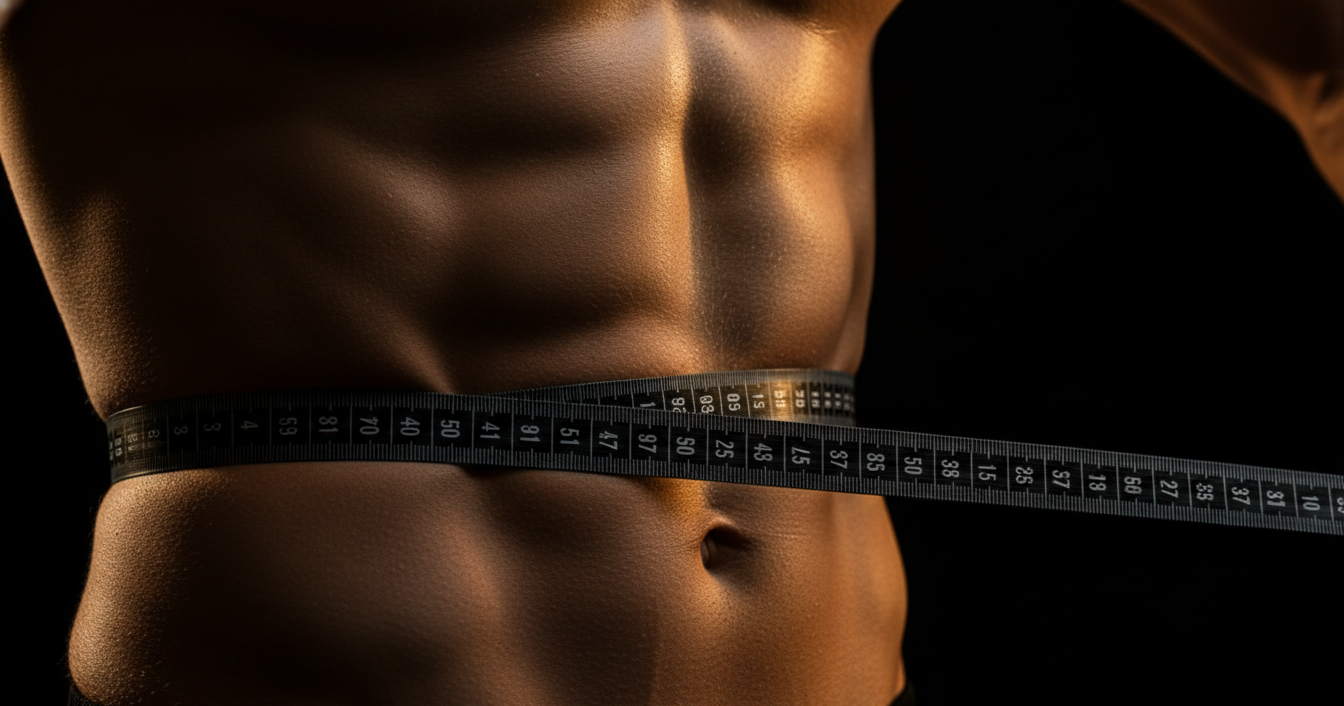
How: Wrap the tape horizontally around your waist at the correct level. Keep it snug but not compressed. Take the measurement after a normal exhale — don't hold your breath.
Why it matters: Waist circumference is the single most clinically useful measurement. It reflects visceral fat (fat around the organs) and is strongly associated with metabolic health.
2. Hips
Location: Around the widest part of the hips and glutes.
How: Stand with feet together. Find the widest point by moving the tape up and down until you locate it.
3. Chest
Location: Around the chest at nipple level (men) or mid-sternum to under-arm (women).
How: Arms relaxed at sides. Breathe normally and take the measurement mid-breath.
4. Upper Arm
Location: The midpoint between the shoulder and elbow, at the widest part of the upper arm.
How: Arm relaxed at side. This measurement helps track both fat loss and muscle development in the bicep/tricep area.
5. Thigh
Location: The midpoint between the hip crease and the top of the knee.
How: Stand with feet shoulder-width. Measure the widest point of the thigh at the designated level.
6. Neck (Optional)
Location: Just below the larynx (Adam's apple), around the narrowest part of the neck.
How: Measure at the narrowest point.
The neck measurement is also used in the Navy body fat percentage formula — useful if you want to track body fat percentage as well as circumferences.
Pro Tip
Mark the measurement points on yourself with a small felt-tip dot the first time, then photograph the location to replicate it accurately at future measurement sessions. This is particularly useful for thigh measurements where the "correct" point can be hard to find consistently.
Recording Your Measurements
Keep a simple tracking spreadsheet or use the notes app on your phone. Record:
- Date
- Weight (taken the same morning)
- Each measurement site in cm
Calculate the total of all sites measured. A decrease in total centimetres is one of the clearest indicators of fat loss, even when scale weight fluctuates.
What to Expect
Waist and hip measurements tend to respond fastest to a cut. Arm and thigh measurements change more slowly and may appear to stay flat in the early weeks even when you're making progress elsewhere.
Expect meaningful changes (1–2cm per site) over 4–6 weeks on a well-constructed cut. Don't panic if week-to-week changes are minimal — the 4-week comparison is what shows real progress.
Combining Measurements with Other Data
Use measurements alongside:
- 7-day average scale weight (trending down?)
- Progress photos (visual changes in shape?)
- Training log (maintaining or increasing performance?)
If all three are moving in the right direction, your cut is working regardless of any single metric.
Warning
If tape measurements are increasing consistently despite a genuine calorie deficit, and training performance is dropping, this could indicate significant muscle loss. Increase protein intake and reduce the deficit before continuing.
Myprotein Impact Whey
The UK's best-selling protein powder. 21g protein per scoop, under 50p per serving on sale.
Affiliate link. See our disclosure.
Key Takeaways
- Tape measurements capture fat loss the scale misses, particularly during recomposition or whoosh effect periods
- Measure waist, hips, chest, upper arm, and thigh — consistently each time
- Morning, before food, same relaxed position every time is essential for comparability
- Fortnightly is the most useful frequency — weekly adds noise, monthly is too slow
- Total circumference (sum of all sites) is an excellent headline metric for tracking cut progress
More like this